ITB Berlin 2026: Corporate Travel & Scope 3 Reporting for the Travel Trade
ITB Berlin returns 3–5 March 2026 as the world's largest travel trade fair, convening 10,000+ exhibitors and 160,000+ attendees at Messe Berlin. For corporate travel managers, hotel revenue directors, and DMO partnerships teams, the event represents three days of contract negotiations, supplier vetting, and intelligence gathering that shape the year's distribution strategy. Accommodation booked via corporateimpt.io delivers the same rack rates as direct reservations, with free cancellation on most inventory, plus automated Scope 3 footprint calculation and UN-verified carbon retirement funded from our commission. Every booking generates an auditable trail that feeds CSRD reporting requirements, eliminating manual expense reconciliation and providing the single-receipt VAT split your finance team requires.

Why Corporate Attendance Delivers Measurable ROI
ITB Berlin concentrates decision-makers who control distribution, procurement, and strategic partnerships across the global travel supply chain. Hotel groups use the three days to lock annual OTA agreements, negotiate GDS positioning, and finalise channel-manager integrations. Corporate travel buyers audit new suppliers for preferred-vendor programmes, compare TMC capabilities, and secure volume discounts that flow through the fiscal year. DMOs pitch consortium bookings, MICE packages, and destination-marketing co-investment to tour operators and wholesalers who commit inventory months in advance.
The business transacted in corridor meetings and evening receptions consistently outweighs the exhibition-floor activity. Contract terms negotiated at ITB set the pricing architecture for Q2 and Q3 launches. Buyers who skip the event forfeit access to pre-release rate structures and find themselves negotiating from weaker positions in April. For hotel asset managers evaluating channel strategy or revenue-management platforms, ITB provides side-by-side vendor comparison and reference-client introductions that would otherwise require months of separate sales calls. The opportunity cost of non-attendance is reliably higher than the combined expense of flights, accommodation, and staff time.
Key Attendee Segments and Strategic Objectives
OTA and metasearch representatives attend to onboard new supply partners, renegotiate commission structures, and preview technology integrations—API connectivity, real-time inventory feeds, dynamic-pricing tools—that launch in spring. Hoteliers and revenue managers scout distribution innovations, audit competitor positioning, and meet platform account managers to resolve ranking or visibility issues that impact direct-booking ratios. Tour operators and wholesalers secure allotments for summer and autumn departures, finalise brochure content, and lock preferential rates that underpin packaged offerings.
Corporate travel managers and TMC procurement teams evaluate duty-of-care tools, expense-policy automation, and ESG reporting modules that satisfy internal audit and CSRD disclosure requirements. Sustainability officers benchmark carbon-accounting methodologies, verify offset-provider credentials, and identify suppliers with credible net-zero roadmaps. Attendance also serves workforce-development objectives: junior buyers gain exposure to negotiation environments, product managers collect competitive intelligence, and regional directors map expansion opportunities in emerging markets showcased across the pavilions.
CSRD Scope 3 Compliance and Auditable Carbon Accounting
The Corporate Sustainability Reporting Directive mandates quantified Scope 3 emissions for business travel, including accommodation. Manual reconciliation—extracting hotel nights from expense reports, estimating per-night footprints, aggregating across cost centres—introduces error and audit risk. Booking ITB accommodation via corporateimpt.io automates the chain: each reservation records property-level energy data, calculates lifecycle emissions using recognised conversion factors, and retires one tonne of UN-verified carbon credits funded from our commission margin.
The transaction generates an on-chain proof-of-retirement certificate and a machine-readable JSON file that integrates directly with sustainability-reporting platforms. Finance teams receive a single invoice with separate VAT line items for accommodation and offset, eliminating the need to split expenses manually. The system handles multi-room group bookings, tracks individual traveller allocations, and exports monthly summaries keyed to cost-centre codes. For organisations filing first CSRD reports in 2025–26, this infrastructure removes the friction that typically delays disclosure and triggers auditor queries.
Hotels listed on corporateimpt.io undergo property-level emissions auditing; we exclude properties that refuse third-party verification or rely solely on purchased offsets without operational reduction programmes. The resulting inventory skews toward internationally managed chains with published net-zero commitments and independently certified properties holding ISO 14001 or equivalent accreditation. Buyers gain assurance that reported footprints reflect actual energy use, not modelled estimates, and that retired credits meet additionality and permanence standards under the Gold Standard or Verra registries.
Booking Infrastructure, Cancellation Terms, and Expense Integration
The booking interface at corporateimpt.io mirrors direct-channel functionality: real-time availability, rate parity with official sites, and identical room categories. Free cancellation applies to the majority of inventory up to 24–48 hours before check-in, matching the flexibility corporate policies require for last-minute itinerary changes. Group bookings—six rooms or more—can be structured with deposit schedules and rooming-list uploads that accommodate delegate registration timelines.
Payment settlement supports corporate credit cards, billing-on-account for established clients, and split invoicing when travel and offset costs must charge to separate GL codes. The system integrates with Concur, SAP Concur, and TravelPerk via API, auto-populating expense reports with itemised receipts and carbon-footprint line items. For organisations using bespoke travel-management platforms, we provide CSV exports and webhook endpoints that push booking confirmations and retirement certificates into internal workflows.
The 5 percent Goodness rewards programme accrues points that convert to future accommodation discounts or additional carbon retirements, offering budget relief on subsequent bookings. Rewards accumulate at the corporate-account level, not individual-traveller level, ensuring that savings benefit the organisation rather than dispersing across personal loyalty schemes. This structure aligns incentives with procurement objectives and simplifies budget forecasting for multi-event travel calendars.
Venue Location, Transit Access, and Session Scheduling
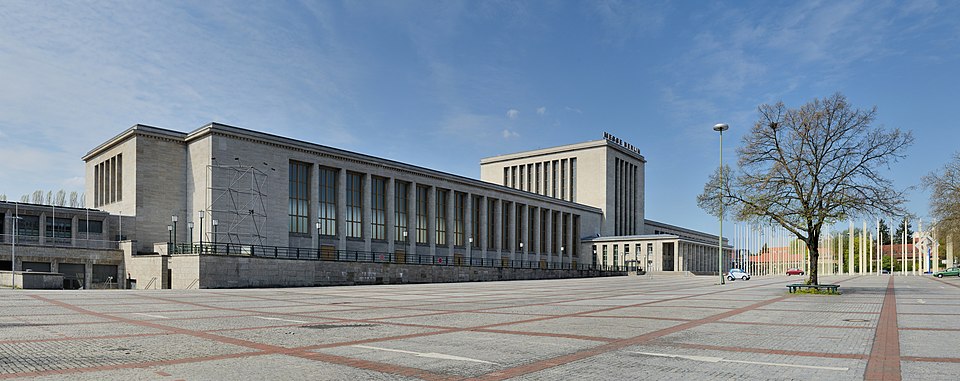
Messe Berlin occupies a 160,000-square-metre site at Messedamm 22 in Charlottenburg, served by the Messe Nord/ICC U-Bahn station on the U2 line and the S-Bahn Messe Berlin stop on lines S41, S42, and S46. Direct rail connections from Berlin Hauptbahnhof take 12 minutes; Tegel Airport replacement BER connects via S-Bahn in approximately 40 minutes with one interchange. The venue's scale requires internal shuttle buses between halls; allow 15-minute transit buffers when scheduling back-to-back meetings in separate pavilions.
Official sessions begin at 09:00 and close at 18:00 daily, though networking events extend past 21:00. Pre-scheduled buyer-supplier meetings concentrate in the mornings, leaving afternoons for exhibition-floor prospecting and pavilion tours. Evening receptions hosted by national tourism boards and hotel consortia require advance RSVP; access is typically limited to pre-registered delegates with exhibitor or hosted-buyer credentials. Proximity to the venue becomes critical on day two and three, when cumulative walking distances and early-morning briefings compress preparation time.
Accommodation Strategy for Multi-Day Trade Attendance
Corporate travel policies favour properties offering business-centre facilities, club-lounge breakfast from 06:30, late-evening room service, and meeting rooms bookable by the hour for client debrief sessions. Charlottenburg hotels provide walking access to Messe Berlin, eliminating reliance on taxis during morning peak congestion. Tiergarten and Mitte locations offer superior dining options for client entertainment but add 20–30 minutes' commute via U-Bahn, which becomes untenable when evening sessions overrun.
Peak-season uplift during ITB week typically reaches 40–60 percent above February baseline rates. Booking eight weeks in advance secures preferred inventory before sell-out; last-minute availability skews toward properties farther from the venue or lacking corporate amenities. Multi-night stays often unlock incremental discounts or complimentary upgrades, particularly for groups occupying five or more rooms. Corporate-rate access through corporateimpt.io matches negotiated contracts with major chains while extending free cancellation further than advance-purchase rates permit, preserving flexibility if delegate attendance shifts.
Post-Event Reporting, ROI Measurement, and Follow-Up Workflow
Quantifying ITB attendance ROI requires tracking contracts signed, supplier shortlists finalised, and pipeline opportunities advanced during the three days. Leading corporate travel teams assign each attendee a pre-event meeting schedule with weighted opportunity values, then measure close rates and deal velocity against baseline. Procurement departments compare negotiated terms—commission structures, payment schedules, service-level agreements—secured at ITB against terms available outside the event window, isolating the value of face-to-face negotiation.
Carbon-accounting data exported from corporateimpt.io feeds into quarterly sustainability dashboards, providing the denominator for emissions-per-transaction or emissions-per-employee metrics that boards and investors increasingly scrutinise. Combining accommodation footprint with flight emissions and ground transport produces a complete Scope 3 profile for the event, which benchmarks against prior years and peer organisations. This data supports business-case development for virtual attendance alternatives or hybrid event strategies, grounding decisions in actual cost and carbon figures rather than assumptions.
Hotels with corporate-rate access for delegates
Hotel Palace Berlin
Landmark property on Europa-Center with executive floors, 24-hour business centre, and board-level meeting suites. Club lounge opens 06:00, accommodating pre-session briefings. GDS-connected with corporate-rate agreements across major TMCs.
Pullman Berlin Schweizerhof
Business-traveller focus with flex-workspace lobby, late check-out on request, and meeting rooms bookable hourly. Proximity to Zoo station supports inter-city rail connections. VAT-split invoicing automated through property management system.
Crowne Plaza Berlin City Centre
IHG corporate-rate access, plug-and-play AV in meeting rooms, and priority late-arrival guarantee. On-site parking supports clients driving from regional offices. Loyalty-point pooling available for corporate accounts.
Motel One Berlin-Ku'damm
Controlled-cost option for junior delegates with workspace corners and express breakfast. Rates remain stable during trade-show peaks, supporting budget predictability. Free cancellation standard across all bookings.
Mercure Hotel Berlin City West
Proximity compensates for limited amenities; suitable for attendees prioritising session access over evening client entertainment. Accor corporate-rate codes apply, simplifying procurement approval workflows.
NH Berlin Kurfürstendamm
NH corporate programme includes complimentary meeting-room hours and flexible billing cycles. Business-class rooms feature dual monitors and ergonomic seating. Late-night room service supports debrief sessions past 22:00.
Steigenberger Hotel Berlin
Executive-floor access includes private lounge with all-day refreshments and evening canapés, reducing per-diem claims. Concierge arranges same-day dry cleaning and courier dispatch. Preferred vendor for German corporate accounts.
Scandic Berlin Kurfürstendamm
Scandinavian sustainability reporting aligns with CSRD requirements; property provides annual emissions audit on request. Group billing consolidated across multi-property stays, streamlining expense reconciliation for pan-European teams.
Practical Logistics: Transit, Timing, and On-Site Navigation
Berlin Brandenburg Airport (BER) lies 30 kilometres southeast of Messe Berlin, connected by Airport Express trains (FEX, RE7, RB14) to Hauptbahnhof in 30 minutes, then U-Bahn U2 westbound to Messe Nord/ICC. Total transit time approximates 50 minutes; taxis cost €50–65 and save minimal time during peak hours. Corporate travel policies typically mandate rail for environmental and cost reasons unless luggage or group size justifies private transfer.
Delegates arriving from western Europe via rail—Amsterdam, Brussels, Paris—reach Berlin Hauptbahnhof directly, then transfer to U2. Domestic arrivals from Frankfurt or Munich use S-Bahn from Hauptbahnhof. Early-morning flights allow same-day participation if landing before 08:00, though schedule risk favours arriving the evening prior. Late departures after 19:00 enable attendance through closing sessions, though exhaustion from three consecutive exhibition days reduces effectiveness of final-afternoon meetings.
On-site navigation within Messe Berlin requires the official app (iOS/Android) for real-time hall maps and exhibitor locations. Halls cluster by region—Asia-Pacific, Americas, EMEA—but product categories scatter across pavilions, necessitating cross-venue movement. Wear comfortable footwear; pedometer data from prior years average 12,000–15,000 steps daily. Coat-check queues peak at opening and closing; budget 10-minute waits or use hotel storage for outerwear.
Credential collection at the registration desk opens 07:30 daily; pre-registered delegates bypass queues using QR codes emailed 48 hours prior. Hosted buyers receive access codes for exclusive lounges with refreshments and private meeting spaces. Business-card supply: anticipate distributing 50–80 cards per day; digital alternatives (LinkedIn QR, vCard exchange apps) gain traction but physical cards remain convention-floor standard.
Frequently asked questions
How does corporateimpt.io accommodation booking integrate with CSRD Scope 3 reporting?
Each booking automatically calculates property-level emissions using verified energy data, retires one tonne of UN-certified carbon credits funded from our commission, and generates a machine-readable JSON file plus on-chain retirement certificate. These outputs integrate via API with Concur, SAP, and bespoke sustainability platforms, providing the auditable trail CSRD disclosure requires without manual reconciliation.
Are rates on corporateimpt.io identical to direct hotel bookings?
Yes. We maintain strict rate parity with hotel direct channels and apply the same corporate-rate codes your organisation negotiates with chains. The carbon retirement—one tonne per booking—is funded from our commission margin, not added to your invoice. You receive identical pricing, free cancellation on most inventory, plus automated Scope 3 reporting at no additional cost.
What cancellation flexibility applies to ITB Berlin accommodation?
Most properties listed offer free cancellation until 24–48 hours before check-in, matching corporate travel-policy requirements. Specific terms display during booking. Group reservations (six rooms or more) can negotiate extended cancellation windows and deposit schedules aligned to delegate registration deadlines, preserving flexibility if attendance shifts.
How do I access corporate rates if my organisation has negotiated contracts with hotel chains?
Enter your corporate-rate code during search; the system applies negotiated rates and verifies eligibility through chain CRS integration. If your code does not populate, contact our corporate-account team to whitelist it. Bookings honour existing agreements while layering carbon accounting and single-receipt VAT splits your direct bookings lack.
Can I book meeting rooms or event space through corporateimpt.io?
Hotel meeting rooms bookable by the hour appear as add-ons during checkout for participating properties. For larger event space or full-day conference facilities, contact our corporate team; we broker terms directly with hotel sales departments and include the carbon footprint of catering and AV in the overall retirement calculation.
What documentation supports internal audit and carbon-offset verification?
You receive: (1) itemised invoice with separate accommodation and offset VAT lines, (2) UN retirement certificate with registry serial numbers, (3) on-chain proof-of-retirement blockchain record, (4) JSON/CSV export of emissions calculation methodology. These satisfy external auditors and provide the evidence trail CSRD Article 29a requires for Scope 3 disclosures.
Which attendee credentials are required to access ITB Berlin?
Trade-visitor registration opens in December; eligibility requires proof of employment in travel distribution, hospitality, or related sectors. Hosted buyers receive invitations from exhibitors or national tourism boards. Public admission is restricted to the final Sunday. Pre-register by late February to avoid on-site queues and secure hosted-buyer lounge access if sponsored.
What is the recommended arrival day for maximising ROI on attendance?
Arrive evening of 2 March to attend opening-day sessions from 09:00 on 3 March. Key contract negotiations and hosted-buyer meetings concentrate on days one and two; day three skews toward smaller exhibitors and follow-up conversations. Departing evening of 5 March captures closing sessions and final networking receptions, though many delegates leave midday to avoid late-night flights.
How does the 5 percent Goodness rewards programme apply to corporate bookings?
Rewards accrue at the corporate-account level, not to individual travellers, and convert to discounts on future accommodation or additional carbon retirements. This structure aligns savings with procurement objectives and simplifies budget forecasting across multi-event calendars, avoiding the dispersion of value into personal loyalty schemes.
Can I book accommodation for the full team in a single transaction with consolidated billing?
Yes. Group bookings (six rooms or more) support rooming-list uploads, staggered arrival/departure dates, and single consolidated invoice. Payment settles via corporate card, billing-on-account, or split invoicing when travel and offset costs charge to separate GL codes. The system tracks individual allocations for Scope 3 reporting while issuing one master receipt.
ITB Berlin 2026 represents the annual crucible where distribution agreements, supplier relationships, and channel strategy coalesce into actionable contracts that shape revenue for the following twelve months. Attendance delivers intelligence and negotiating leverage unavailable outside the trade-floor environment, while Scope 3 compliance obligations demand accommodation workflows that generate auditable carbon data without manual intervention. Booking via corporateimpt.io embeds CSRD-aligned reporting into the transaction itself, funding verified retirements from commission margin and producing the documentation your finance and sustainability teams require. The result: same rates, better data, defensible disclosures, and measurable ROI on every night spent in Berlin during those three critical days in March.