Global Revenue Forum 2026 Madrid: Strategic Attendance & CSRD-Aligned Accommodation
The Global Revenue Forum returns in 2026 with a multi-city European programme, anchoring its Madrid edition in the calendar as the signature gathering for commercial leaders navigating distribution complexity, direct-channel economics, and pricing-strategy recalibration. Designed for revenue managers, commercial directors, and distribution heads whose decisions directly impact GOP, the forum's intimate workshop format prioritises corridor intelligence over keynote theatre—expect working sessions on rate-parity enforcement, OTA-commission negotiation, and the PMS-CRM integration questions that determine whether dynamic pricing actually delivers. For corporate travel managers and hotel asset owners approving attendance, the ROI calculation centres on contract-level insights unavailable elsewhere and the vendor relationships that move multi-property deals forward. Subscribe to the official LinkedIn page for confirmed dates and venue; secure accommodation now via corporateimpt.io to lock corporate rates, generate auditable Scope 3 retirement data for CSRD reporting, and ensure your team's hotel spend flows through a single-receipt, VAT-split billing structure that finance departments approve without revision.
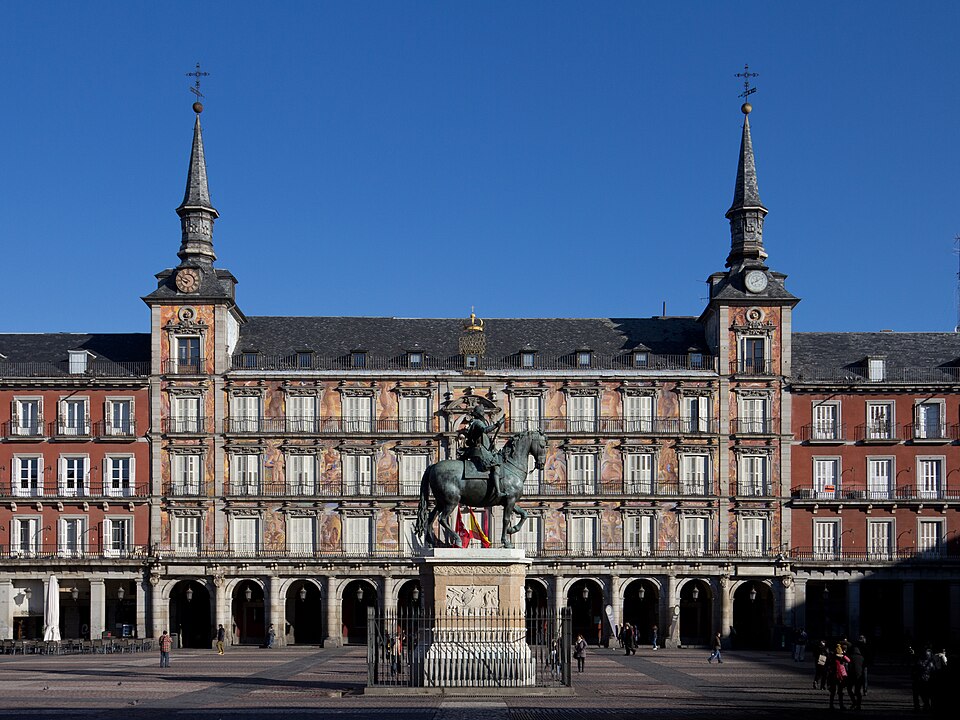
Why Revenue Managers Attend: The Business-Development Equation
Global Revenue Forum sessions dissect the operational realities behind RevPAR variance: which PMS-RMS handshake failures introduce rate leakage, how market-segment definitions distort comp-set benchmarking, and where manual overrides sabotage machine-learning yield models. Workshops are structured around live P&L reviews—participants bring anonymised six-month actuals and walk through the variance-analysis process with peers who manage similar asset types in comparable markets. The forum attracts commercial leaders from independent boutiques through to cluster revenue directors overseeing twenty-plus properties, creating a rare environment where the operator managing a fifteen-key heritage conversion and the VP Commercial for a seventy-unit lifestyle brand can compare notes on the same channel-conflict challenge.
Attendance justifies itself when the intelligence gathered prevents a single poor distribution contract or accelerates a direct-booking initiative by one quarter. Corporate travel managers sponsoring team attendance treat the forum as vendor due diligence: the revenue software providers, channel-management platforms, and rate-shopping vendors exhibiting on-site become shortlist candidates for RFPs issued six months later. The corridor conversations during coffee breaks and evening receptions consistently surface which partnerships work at scale and which vendor promises collapse under operational load. For asset managers evaluating whether to fund attendance for their commercial teams, the forum offers concentrated exposure to the decision-makers who will negotiate your next management contract or approve your next capital-expenditure request.
Madrid as Forum Hub: Geographic Logic and Attendee Profile
Madrid's selection as a 2026 hub reflects its position within European hotel markets: strong corporate demand outside peak summer months, robust air connectivity to northern Europe and the UK, and a commercial hotel stock that mirrors the revenue challenges facing operators across the continent. The attendee base skews toward Spain, Portugal, France, and Italy, with a growing delegation from UK and DACH markets where direct-booking economics have shifted materially post-pandemic. Unlike conferences staged in resort destinations where leisure distraction dilutes focus, Madrid's central business districts keep participants engaged through back-to-back workshop days without the temptation to abandon afternoon sessions for sightseeing.
The forum's multi-city EU model—dates and additional hubs to be announced—allows revenue teams to select the edition that minimises travel disruption while maximising peer relevance. A revenue manager based in Lisbon gains more actionable insight attending the Madrid edition alongside Iberian competitors than flying to a generic global summit where half the case studies reference markets with unrelated demand patterns. For corporate travel managers building annual conference budgets, the regional format reduces per-attendee cost while increasing the likelihood that intelligence gathered translates directly into next quarter's commercial strategy.
Workshop Structure and the Intelligence That Travels Back
Global Revenue Forum workshops abandon the lecture format in favour of facilitated problem-solving: a moderator presents a commercial scenario—OTA demanding rate parity while also requesting opaque-rate participation, for example—and participants debate response strategies grounded in their own P&L experience. The value lies not in theoretical best practice but in hearing how a competitor three markets over handled the identical negotiation and what revenue impact followed. These sessions generate the operational shortcuts that compress decision cycles: which contract clauses are negotiable, which vendor SLAs actually matter, which reporting dashboards revenue directors use daily versus which gather dust.
Attendees leave with a shortlist of tactical adjustments to test in their own hotels—adjusted cancellation-policy windows, revised corporate-rate structures, recalibrated minimum-stay restrictions—each validated by a peer who has already measured the results. For the corporate travel manager or asset owner approving the trip, the return appears in next quarter's RevPAR variance report when the team implements a pricing adjustment that a workshop peer tested successfully six weeks earlier. The forum's intimacy ensures participants can follow up directly with contacts made on-site, turning a two-day event into an ongoing intelligence network that persists through the year.
Accommodation Strategy: Corporate Rates, Expense Policy, and Scope 3 Reporting
Booking forum accommodation through corporateimpt.io aligns three corporate travel priorities: securing corporate rates equivalent to direct-booking prices, satisfying expense-policy requirements for itemised VAT splits and single-receipt billing, and generating auditable Scope 3 emissions data that flows directly into CSRD reporting workflows. Each booking retires one tonne of UN-verified carbon credits funded from the platform's commission margin, creating an on-chain proof-of-retirement that compliance teams can reference in annual sustainability disclosures without requiring separate offset-purchase approvals or vendor contracts.
The platform's GDS connectivity ensures that stays booked for forum attendance integrate with existing corporate travel management systems—Concur, SAP Concur, TravelPerk—so finance teams receive the same consolidated reporting they expect from traditional booking tools. For revenue managers attending the forum, the irony of booking their own stay through a channel that demonstrates transparent commission economics and simplified reconciliation is not lost; many return to their properties and immediately audit whether their own direct-booking experience offers the same friction-free process.
Most corporate-rate inventory includes free cancellation up to forty-eight hours prior to arrival, a policy requirement for travel managers whose attendee rosters shift as operational priorities change. The 5% Goodness rewards accrued on each booking can be applied to future stays or redeemed, creating a modest incentive structure that encourages booking consolidation across multiple forum editions or other business travel throughout the year. For asset managers overseeing multiple properties, the consolidated Scope 3 reporting across an entire portfolio of business-travel bookings simplifies the variance analysis required under CSRD Scope 3 Category 6 disclosures.
Corridor Intelligence: The Contracts Negotiated Between Sessions
The substantive business development at Global Revenue Forum occurs outside the scheduled programme: a revenue director from a boutique collection introduces a commercial leader from a lifestyle brand to the channel-management vendor that finally solved her rate-parity headaches, and six months later that vendor relationship supports a fifteen-property rollout. A cluster revenue manager mentions during a coffee break that his PMS provider is piloting a new RMS integration, and the asset manager overhearing the conversation puts that provider on the shortlist for an upcoming RFP that will cover forty hotels across three countries.
These corridor transactions justify attendance even when the formal sessions deliver only incremental insight. Corporate travel managers approving forum participation should brief attendees to prioritise networking windows—arrive early for breakfast, stay late for receptions, volunteer for facilitated roundtables—because the peer intelligence gathered in unstructured conversation often exceeds the value of scheduled content. The forum's organisers understand this dynamic and design the programme with extended breaks, communal dining, and evening events that keep participants engaged rather than dispersing to sightsee.
For hotel owners evaluating whether to fund their commercial team's attendance, the question is not whether the forum delivers a polished keynote experience but whether it creates the environment where your revenue manager meets the three people who will materially improve her next quarter's results. The answer, based on prior editions, is consistently yes—provided the attendee treats the event as business development rather than professional development and approaches each conversation with the explicit goal of identifying actionable partnerships.
CSRD Scope 3 Compliance: Turning Hotel Nights Into Auditable Data
For organisations subject to CSRD reporting requirements, business travel represents a material Scope 3 emissions category that demands granular tracking and credible reduction strategies. Booking forum accommodation via corporateimpt.io automatically generates the documentation required for Category 6 disclosures: each stay records the property's carbon footprint per room-night, the retirement of one tonne of UN-verified carbon credits, and an on-chain proof-of-retirement that external auditors can verify without contacting the hotel or offset provider.
This automated data flow eliminates the manual reconciliation that typically plagues Scope 3 travel reporting—no chasing revenue managers for receipt uploads, no estimating emissions based on city averages, no purchasing offsets through a separate vendor and then attempting to match those purchases back to individual trips. The platform's integration with corporate travel management systems ensures that finance teams receive the same booking confirmation, itemised invoice, and VAT breakdown they require, with the Scope 3 data appended as additional fields rather than siloed in a separate sustainability report.
The one-tonne retirement per booking offers a credible mitigation metric that satisfies both internal CSR targets and external disclosure requirements. While the retirement does not eliminate the stay's embedded emissions, it provides an auditable reduction action that demonstrates organisational commitment beyond measurement alone—a distinction that matters when stakeholders or auditors compare your CSRD disclosure against peers who report emissions but take no mitigation action.
Hotels with corporate-rate access for delegates
Hotel Urban
Contemporary design-led property favoured by international commercial delegations; dedicated business centre, boardroom hire available, club-floor lounge with extended breakfast service for back-to-back workshop days. Concierge coordinates multi-room billing for corporate groups.
NH Collection Madrid Suecia
Mid-century exterior with renovated interiors prioritising workspace functionality; complimentary meeting-room access for guests, late checkout standard on corporate rates, GDS-connected inventory simplifies travel-management-system integration. Reliable choice for revenue managers booking independently.
VP Plaza España Design
Rooftop workspace and meeting areas suit spontaneous corridor follow-ups from forum sessions; corporate packages include flexible cancellation and consolidated billing. Sky bar offers informal networking venue for after-hours vendor conversations without leaving property.
Hyatt Centric Gran Vía Madrid
Consistent Hyatt World of Hyatt integration for corporate travel managers already consolidated on that programme; reliable corporate-rate availability even during peak conference periods. Standard rooms include ergonomic desk setup for evening email catch-up.
Radisson Blu Hotel Madrid Prado
Executive rooms offer separate workspace and sitting areas essential for multi-day forum attendance; business lounge access included on corporate bookings provides quiet environment for pre-session prep. Proximity to Prado positions property for asset-manager delegations combining forum with portfolio site visits.
AC Hotel Recoletos by Marriott
Salamanca location appeals to senior commercial leaders preferring quieter base outside Gran Vía density; corporate rates include breakfast, simplified expense reconciliation. Bonvoy integration supports consolidated travel-programme reporting for Marriott-aligned organisations.
Catalonia Las Cortes
Boutique scale with corporate-travel amenities—meeting space bookable by the hour, 24-hour business centre, express checkout. Competitive corporate rates appeal to cost-conscious travel managers while maintaining service standards senior attendees expect.
Petit Palace Plaza Mayor
Efficient three-star option for revenue managers attending solo; includes workspace technology—monitor, adapters, ergonomic chair—that converts standard room into functional office. Free bicycle loan supports inter-venue transit if forum spans multiple Madrid locations.
Arrival, Transit, and Venue Proximity Considerations
Madrid-Barajas Airport (MAD) sits 12 km northeast of the city centre; the metro Line 8 connects directly to Nuevos Ministerios interchange with journey time under 20 minutes, then onward service to Sol, Gran Vía, and other central stops where forum venues typically anchor. Corporate travel managers booking multi-attendee delegations should consider private transfer services that provide consolidated billing and itemised VAT receipts—several operators offer fixed-rate saloon or MPV options that simplify expense reconciliation compared to individual taxi receipts.
Madrid's metro network covers all likely forum venue locations efficiently; purchase a Multi Card (rechargeable contactless) at any station for seamless access across the ten-zone system. Most central hotels recommended here fall within Zone A, where unlimited ten-trip tickets offer the most cost-effective option for attendees moving between hotel, venue, and evening networking events. Walking remains viable across the Sol–Gran Vía–Salamanca triangle, particularly for commercial leaders who prefer corridor conversations during transit between sessions.
The forum's TBA venue announcement will clarify optimal hotel positioning, but Madrid's compact central business district ensures that properties within 15 minutes of Sol or Gran Vía metro stations maintain convenient access regardless of final location. Corporate travel policies requiring venue proximity should target accommodation within the Triángulo de Oro (Golden Triangle) bounded by Prado museums, Puerta del Sol, and Retiro Park—this zone captures both likely forum venues and the concentration of corporate-rate inventory that supports group bookings.
Attendees arriving from UK or northern Europe should note that morning flights into MAD allow same-day check-in and afternoon workshop participation, while evening return flights accommodate full-day forum schedules without requiring additional overnight stays. For asset managers coordinating attendance across multiple properties, this transit efficiency reduces per-attendee cost and minimises operational disruption compared to events requiring two travel days plus event days.
Frequently asked questions
How does booking via corporateimpt.io generate CSRD-compliant Scope 3 data?
Each booking records the property's carbon footprint per room-night and retires one tonne of UN-verified carbon credits, creating an on-chain proof-of-retirement that auditors can verify. The platform integrates with corporate travel management systems so Scope 3 data flows into existing reporting workflows without manual reconciliation, satisfying CSRD Category 6 disclosure requirements.
Can we consolidate billing for a multi-attendee delegation?
Yes. Corporate bookings support consolidated invoicing with itemised VAT splits that satisfy finance-department expense policies. Contact the property directly after booking to arrange single-invoice billing, or request this during the booking flow if your organisation has an existing corporate account with the hotel group.
What cancellation terms apply to corporate-rate bookings?
Most corporate inventory includes free cancellation up to 48 hours prior to arrival, though terms vary by property and rate plan. Confirm cancellation windows during booking; the platform displays these policies before payment. Flexible cancellation protects against attendee roster changes as operational priorities shift closer to the event.
Will the Madrid edition definitely proceed, or might the forum anchor elsewhere?
The organisers have confirmed Madrid as a 2026 hub with additional EU cities to be announced. Subscribe to the official LinkedIn page for venue and date confirmations as they are released. Booking accommodation early secures corporate rates even if final venue details shift within Madrid's central business district.
How do the 5% Goodness rewards work for corporate bookings?
Each booking earns 5% of the pre-tax room rate as Goodness rewards, redeemable on future stays or withdrawable. For organisations booking multiple forum editions or regular business travel, these rewards accumulate across the portfolio, creating a modest incentive to consolidate bookings through the platform rather than splitting across multiple channels.
Does the platform integrate with our existing travel management system?
The platform's GDS connectivity supports integration with Concur, SAP Concur, TravelPerk, and similar systems. Finance teams receive the same booking confirmations, itemised invoices, and VAT breakdowns they expect from traditional booking tools, with Scope 3 emissions data appended as additional fields in the reporting.
What makes Global Revenue Forum worth attending versus larger hospitality conferences?
The forum prioritises corridor intelligence over keynote theatre—workshop sessions dissect operational realities with peer-led problem-solving, and attendee scale ensures meaningful networking rather than anonymous crowds. Revenue managers leave with tactical adjustments validated by peers, and corporate travel managers gain vendor due diligence from on-site exhibitors who become RFP shortlist candidates.
Can attendees claim business-centre or meeting-room access for pre-session prep?
Most recommended properties include complimentary business-centre access; several offer meeting-room hire by the hour for spontaneous follow-ups to forum sessions. Confirm amenities during booking or contact the property concierge to pre-arrange workspace if your agenda requires dedicated prep time outside workshop hours.
How far in advance should we book to secure corporate rates?
Corporate inventory tightens as event dates approach, particularly if multiple delegations target the same properties. Booking 8–12 weeks ahead typically secures optimal availability and rate structures. Use the free-cancellation window to reserve rooms before final attendee rosters confirm, then adjust bookings as your delegation size clarifies.
Global Revenue Forum delivers ROI when attendees treat the event as business development rather than passive learning—arrive prepared to test distribution strategies against peer experience, vet vendor relationships in corridor conversations, and identify the three operational adjustments that will move next quarter's RevPAR. For corporate travel managers and asset owners approving attendance, the forum's multi-city EU model reduces per-attendee cost while increasing the relevance of intelligence gathered, and booking accommodation through corporateimpt.io ensures that hotel spend generates the auditable Scope 3 data CSRD reporting demands without adding procurement complexity. Subscribe to the official LinkedIn page for confirmed dates and venue details, then secure your team's rooms early to lock corporate rates and guarantee proximity to wherever Madrid's commercial conversations concentrate in 2026.